

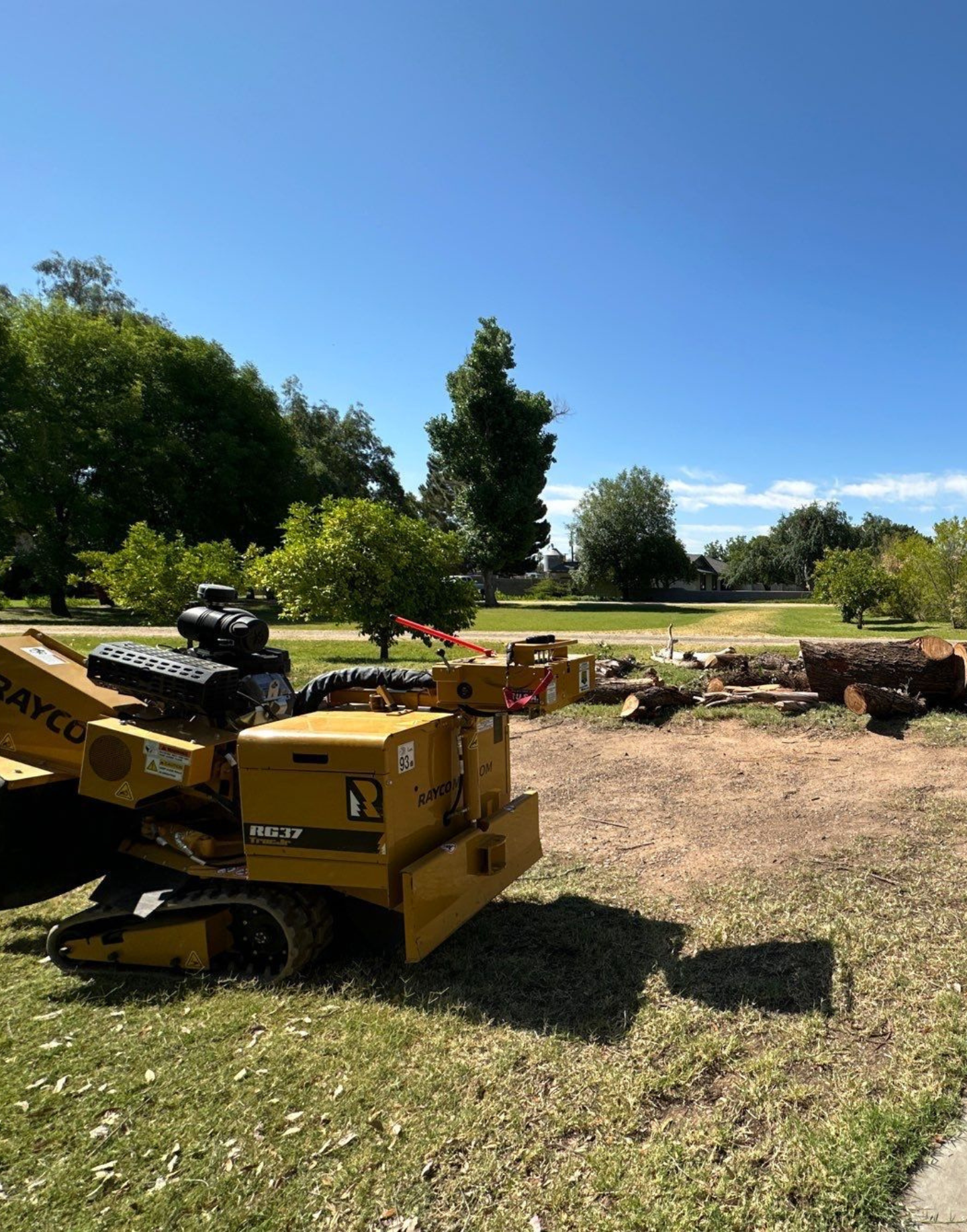
Stump Removal vs. Stump Grinding: Which Is Better for Mesa?
Stump Removal vs. Stump Grinding in Mesa
What Is the Difference Between Stump Removal and Stump Grinding?
When a tree is removed from a Mesa property, the job is not always finished once the trunk and branches are gone. The remaining stump can take up valuable yard space, interfere with landscaping, attract unwanted pests, or make future planting and construction more difficult. Homeowners generally have two primary options: stump grinding or complete stump removal.
Although the terms are sometimes used interchangeably, they describe different processes.
Stump grinding uses specialized mechanical equipment to grind the remaining stump into wood chips. The visible stump is reduced below the surrounding grade, while much of the root system remains underground.

Stump removal involves physically excavating the stump and, depending on the situation, larger portions of the associated root system. This can require digging, cutting, specialized equipment, and removal of the resulting debris.
The University of Arizona Cooperative Extension recognizes both manual stump removal and stump grinders as mechanical approaches to dealing with unwanted woody stumps. It also notes that stump grinders work best on relatively open, level sites.
The better option for a Mesa property depends largely on what the homeowner plans to do with the area afterward.
When Stump Grinding Makes More Sense
For many residential properties, stump grinding is the practical choice when the primary goal is to eliminate the visible stump and reclaim usable surface space.
A stump grinder uses a rotating cutting wheel to break the stump into small wood chips. The resulting cavity can then be cleaned out and, depending on the future use of the area, backfilled with appropriate soil or other material.
Grinding can be particularly useful when a stump is located in an established landscape where completely excavating the root system could disturb surrounding plants, irrigation, hardscape, or soil.
For example, a Mesa homeowner may prefer grinding when:
- The goal is simply to remove the visible obstruction
- The area will remain part of the existing landscape
- There are established plants nearby
- The stump is difficult to excavate without disturbing the property
- The homeowner wants to reclaim lawn or landscape space
- Complete root removal is not necessary
One important distinction is that stump grinding does not mean every root has been removed. Larger roots can remain underground and may gradually decay. The University of Arizona notes that mechanical stump removal methods can be effective, but the biology of the particular tree matters because some woody species can regenerate from remaining root material.
This distinction is important when planning what will happen in the space after grinding.
When Complete Stump Removal May Be Better
There are situations where grinding the stump below grade may not be enough. If the homeowner needs the stump and a substantial portion of its root system physically removed, excavation may be the more appropriate approach.
Complete removal can make sense when the area will be significantly redesigned or when remaining roots would interfere with the planned project. For example, a homeowner preparing to install a new structure, construct hardscape, or make substantial landscape changes may have different requirements than someone simply trying to eliminate an eyesore.
Stump removal may be considered when:
A new structure is planned: Construction projects may require the area to be cleared of larger woody material and roots.
A new tree will occupy the same location: The remaining root system can complicate preparation of the planting site, depending on the species and location.
Large roots are creating an obstruction: Excavation may be appropriate when substantial roots are interfering with planned landscape work.
Regrowth is a concern: Some tree species can produce new shoots from remaining roots or stumps. The University of Arizona specifically notes that certain woody plants in Arizona can resprout from cut stumps and root fragments.
However, complete stump removal is typically more disruptive to the surrounding landscape than grinding. Excavation can disturb soil, irrigation lines, nearby plants, and hardscape, so the additional work should have a clear purpose.
Stump Grinding vs. Removal for Mesa Properties
There is no universal winner between stump grinding and complete removal. The right choice depends on the property’s layout, the tree species, the stump’s size and location, and what the homeowner wants to do with the space afterward.
| Consideration | Stump Grinding | Complete Stump Removal |
| Visible stump | Removed below grade | Completely removed |
| Larger root system | Primarily remains | More extensive removal |
| Landscape disturbance | Generally less | Generally greater |
| Future landscaping | Often suitable | Useful when extensive excavation is planned |
| New construction | May not be sufficient | Can be preferable |
| Regrowth concerns | Depends on species | More thorough physical removal |
| Soil disturbance | Generally limited to stump area | Can be substantially greater |
For a typical Mesa backyard where the homeowner simply wants to eliminate an old stump and restore the appearance of the landscape, grinding may be the more practical solution. If the property is being redesigned or the stump’s root system is interfering with a planned project, complete removal may be worth considering.
Another factor is access. Equipment needs enough room to safely reach the stump. The University of Arizona notes that stump grinders work best on relatively open, level sites, so difficult access or steep terrain can affect how the work is approached.
Before choosing a service, homeowners should also confirm exactly what the quoted work includes. The University of Arizona recommends that tree-care contracts clearly specify whether tree removal includes stump grinding, how deep the stump will be ground, whether the cavity will be filled, and what cleanup is included.
Choosing the Right Stump Service in Mesa
The best stump solution starts with looking beyond the stump itself. A professional should consider the stump’s size, species, location, surrounding landscape, accessibility, and the homeowner’s plans for the area.
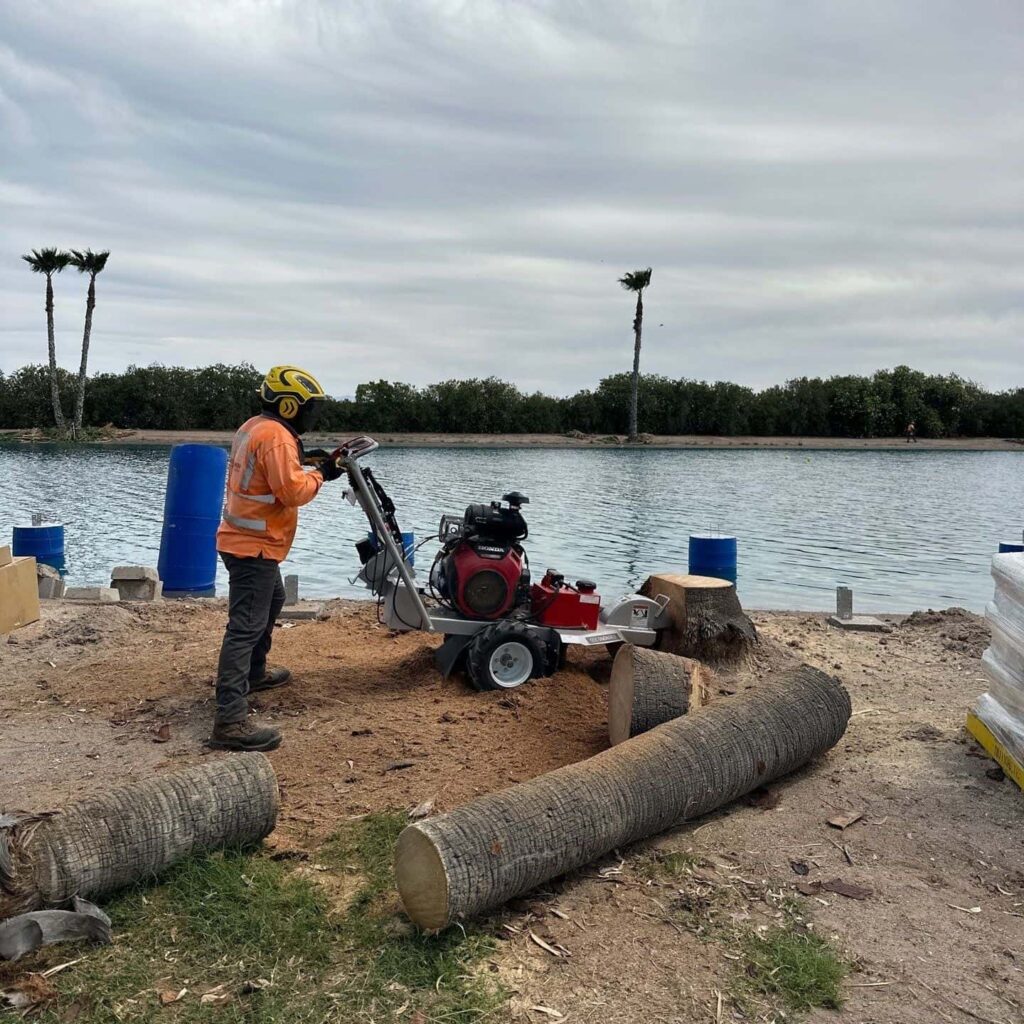
Mesa homeowners should ask what will happen to the stump material, how deep the stump will be ground if grinding is selected, whether surface roots are included, how the resulting cavity will be handled, and whether cleanup is part of the service.
Safety is another important consideration. Stump grinding and excavation involve powerful equipment and can produce flying debris, uneven ground, and other hazards. TreesAreGood recommends using trained professionals for hazardous tree-care work, particularly when specialized equipment is required.
Homeowners should also be cautious about choosing a contractor based solely on the lowest price. The University of Arizona Cooperative Extension recommends comparing multiple professionals and evaluating experience, reputation, professionalism, equipment, and the details included in the contract.
At Jose Knows Trees, the right stump service for a Mesa property should be based on what the homeowner actually needs. Stump grinding is often a practical way to eliminate the visible stump with less disruption to the surrounding landscape, while complete stump removal may be more appropriate when the root system itself needs to be excavated for a future project.
Understanding that difference before scheduling service can help Mesa homeowners choose an approach that fits their property, budget, and long-term landscaping plans. Get a free estimate!